
Turning Feedback Into Loyalty: How to Make Customers Never Want to Leave
Updated: Oct 7
Why listening well—and acting consistently—is one of the most powerful growth strategies we have as entrepreneurs
Most entrepreneurs claim to value customer feedback.
We ask for it.
We collect it.
We read it—sometimes quickly, sometimes defensively.
But far fewer of us have built a system for what happens after feedback is given.
And that’s where loyalty is either created—or quietly lost.
We explore feedback not as a customer service task, but as a strategic leadership discipline. Because feedback, when handled well, does far more than fix problems.
It builds trust.
It strengthens relationships.
It creates an emotional connection.
It turns customers into long-term advocates.
And when handled poorly—or ignored—it does the opposite.
This newsletter is about closing that gap.
Not by chasing perfection.
Not by reacting to every opinion.
But by creating intentional, repeatable ways to listen, respond, and improve, customers feel heard, valued, and confident in staying with us.
Part 1: Why Feedback Is the Missing Link Between Satisfaction and Loyalty

There’s an important distinction we don’t always make clearly enough as business owners.
Satisfied customers are not the same as loyal customers.
Satisfaction is transactional.
Loyalty is emotional.
A satisfied customer may stay—for now.
A loyal customer stays even when they have other options.
And feedback is one of the strongest bridges between the two.
When customers see that their voice matters—when they experience real follow-through, not just polite acknowledgment—they form a deeper connection to the business. They stop seeing us as a vendor and start seeing us as a partner.
But that only happens when feedback is treated as input for improvement, not as criticism to defend against.
One of the biggest shifts we can make is to reframe feedback as information, not judgment.
Feedback is not a referendum on our worth as entrepreneurs.
It’s data about the customer experience.
And data, when used well, is leverage.
Part 2: Why Entrepreneurs Often Resist Feedback (Even When We Ask for It)

If we’re honest, many of us have a complicated relationship with feedback.
We want it—but only the good kind.
We ask for it—but hope it confirms what we already believe.
We say we’re open—but feel defensive when it stings.
That’s human.
Entrepreneurship is personal. We’ve poured time, energy, money, and emotion into what we’ve built. So when feedback points to a flaw, it can feel like a personal critique—even when it isn’t.
But avoiding feedback doesn’t protect us.
It isolates us.
When customers don’t feel safe giving feedback, they don’t stop having opinions.
They simply stop sharing them with us.
They share them with:
• friends
• colleagues
• competitors
• online reviews
• or their own internal decision to leave
Feedback always exists.
The only question is whether we hear it too early or too late.
Part 3: Creating Feedback Loops That Invite Honesty

Customers don’t give honest feedback by accident.
They give it when the environment feels safe.
If feedback only appears when something goes wrong, it usually means customers didn’t feel invited to speak earlier.
Strong feedback loops are intentional.
They don’t rely on chance conversations or reactive surveys after a problem.
They’re built into the way we operate.
This means:
• asking regularly, not just once
• asking clearly, not vaguely
• asking at the right moments, not only at the end
• listening without interrupting or explaining
• acknowledging feedback without defensiveness
Feedback loops work best when they feel normal—not dramatic.
When feedback becomes part of the relationship, customers relax. They stop bracing for conflict and start contributing ideas.
And that’s where loyalty begins to form.
Part 4: The Power of Simply Asking the Right Questions

One of the simplest—and most effective—things we can do is ask better questions.
Not leading questions.
Not self-protective questions.
But open, genuine ones.
Instead of:
“Everything okay?”
We ask:
“What could we improve?”
“What felt confusing or frustrating?”
“What worked particularly well for you?”
“What almost stopped you from moving forward?”
“What would make this experience even better next time?”
These questions communicate something important:
We care about the experience—not just the transaction.
And when customers sense that, they lean in instead of pulling away.
Part 5: What We Do With Feedback Matters More Than How We Collect It

Collecting feedback is easy.
Turning it into loyalty is where most businesses fall short.
We focus on the moment after feedback is received—because that moment determines whether trust is strengthened or weakened.
The fastest way to lose goodwill is to ask for feedback and then ignore it.
The fastest way to build loyalty is to show customers that their input led to action.
That doesn’t mean implementing every suggestion.
It means closing the loop.
Customers want to know:
• that we listened
• that we understood
• that we considered their perspective
• that something changed, or there was a clear reason it didn’t
Silence after feedback feels like dismissal.
Follow-up feels like respect.
Part 6: Responding Without Defensiveness Builds Trust
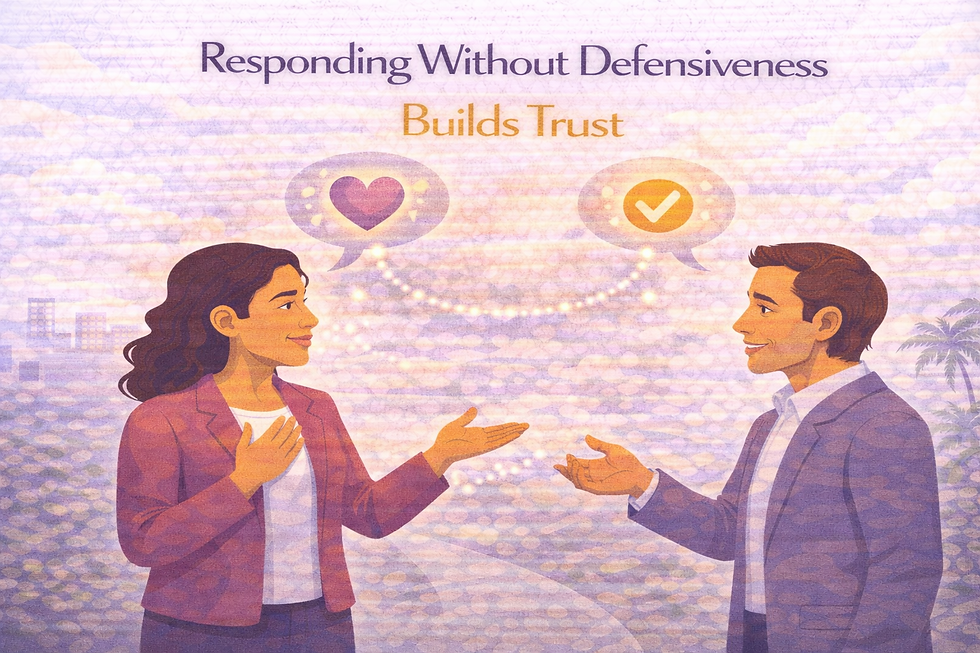
One of the most subtle loyalty killers is defensiveness.
We’ve all felt it—the urge to explain, justify, or clarify why something happened the way it did.
But from the customer’s perspective, defensiveness sounds like dismissal.
A calm, grounded response does something powerful:
It validates the experience—even if we don’t fully agree with the interpretation.
That validation alone can turn frustration into relief.
Often, customers don’t need perfection.
They need acknowledgment.
When we respond with curiosity instead of correction, we signal that the relationship matters more than being “right.”
Example:
During a recent cruise, I was asked for feedback partway through the trip, not after it ended. Once I submitted the feedback card, several team members followed up almost immediately, acknowledged my concerns, and offered solutions. Most issues were resolved right away, and the combination of quick action, sincere apologies, and simple thank-yous made a lasting positive impression.
And that’s a rare experience—which is exactly why it builds loyalty.
Part 7: Feedback as a Window Into Our Systems

One of the most important shifts we make is moving feedback out of the emotional realm and into the operational one.
When we hear the same feedback repeatedly, it’s rarely a people problem.
Confusion points to unclear communication.
Delays point to broken workflows.
Inconsistency points to a lack of standardization.
Frustration points to unmet expectations.
Feedback becomes a diagnostic tool.
Instead of asking, “Why is this customer unhappy?”
We ask, “What part of our system allowed this experience?”
That shift removes blame—and creates progress.
Part 8: Turning Feedback Into Continuous Improvement

Loyalty isn’t built by fixing one issue once.
It’s built by showing customers that improvement is ongoing.
When customers see us evolving—refining processes, clarifying communication, improving delivery—they gain confidence that staying with us is the right choice.
Consistency builds trust.
Improvement builds confidence.
Together, they build loyalty.
This is where feedback becomes fuel—not friction.
Part 9: Why Customers Stay When They Feel Heard

One of the most interesting patterns we’ve seen over the years is this:
Customers who experience a problem—and feel heard—often become more loyal than customers who never experienced a problem at all.
Why?
Because the recovery builds trust.
When we handle feedback well, customers see:
• accountability
• responsiveness
• care
• integrity
They don’t just evaluate the outcome.
They evaluate how we showed up.
And when we show up consistently, and with a commitment to making things better, loyalty deepens.
Part 10: Building Feedback Into the Culture—Not Just the Process

Feedback can’t live only in surveys or support tickets.
It has to live in the culture.
When teams are encouraged to listen, escalate patterns, and suggest improvements, feedback stops being isolated.
It becomes a shared responsibility.
This requires:
• psychological safety internally
• clear channels for sharing insights
• leadership that listens to the team as well as customers
• systems that turn insights into action
When teams see feedback taken seriously, they become more engaged.
When customers see that engagement, trust grows, as does loyalty.
Part 11: Loyalty Is Built in Small Moments, Not Big Gestures

We often assume loyalty requires grand gestures.
In reality, it’s built through small, consistent actions.
A thoughtful follow-up.
A clear explanation.
A proactive adjustment.
A sincere acknowledgment.
A visible improvement.
These moments compound.
Customers don’t remember everything—but they remember how we made them feel.
And positive feelings are the strongest emotional drivers of loyalty.
Part 12: Practical Application — Turning Feedback Into a Loyalty System

Rather than overhauling everything at once, we recommend starting small.
Choose one feedback channel.
Choose one improvement opportunity.
Choose one follow-up habit.
Then build from there.
The goal isn’t perfection.
The goal is consistency.
Over time, feedback stops feeling disruptive—and starts feeling like guidance.
Expert Spotlight: Jen McAllister, CPA – Owner of Rise CPA & Accountants
Contact: jen@riseaccountingllc.com | riseaccountingllc.com
Meet Jen McAllister the fearless leader behind Rise CPA & Accountants. With a lifelong pursuit of knowledge, Jen has built a firm defined by dedication, expertise, and a passion for helping others succeed.
Expert - Fractional Accounting Services for Small Business Owners Who Want Clarity, Not Complexity
At Rise CPA & Accountants, our fractional accounting services are designed for growing businesses that need experienced financial leadership without the overhead of a full-time hire. We partner with you to bring clarity, structure, and confidence to your financial operations so you can make informed decisions and scale with intention.
Fractional accounting with Rise is not about filling a gap. It is about building a strategic relationship. We integrate into your team, align with your goals, and become a trusted extension of your business.
Collaborative by Design
We thrive on collaboration. Our fractional accounting model is built on partnership, not transactions. We work closely with you, your internal team, and your other advisors to ensure alignment and transparency across your financial picture. By uniting diverse expertise with supportive relationships, we deliver resourceful solutions that foster connection, balance, and long-term success. We listen first, then design solutions that fit your business—not a generic template.
Reliable at Every Level
Reliability is foundational to how we serve. We do what we say we will do, consistently delivering dependable, timely, and accurate financial support. Our clients count on us for:
· Clean, organized, and trustworthy financials
· Timely reporting and clear communication
· Strong follow-through and professional execution
· Proactive insights that support confident decision-making
We bring structure and predictability to your financial operations, so your numbers become a stable foundation for growth.
Genuine in Every Relationship
We approach our work with confidence, positivity, and a personal touch. You are not just another client—you are a business owner with goals and a vision worth supporting. We build trust through authenticity, explain the “why” behind the numbers, and translate complexity into clarity. Our goal is to make accounting feel approachable, supportive, and human.
What Fractional Accounting Typically Includes
Every engagement is customized, but most clients rely on us for:
· Financial oversight and strategy
· Financial statement preparation and analysis
· Cash flow management and forecasting
· Budgeting and planning
· Process improvement and system optimization
· Coordination with tax and advisory services
Our level of involvement scales with your needs, providing the right support at the right time.
Why Rise
Fractional accounting gives you access to senior-level financial expertise with flexibility and efficiency. With Rise, you gain more than technical skill—you gain a collaborative, reliable, and genuine partner invested in your success. We bring clarity to your numbers, structure to your systems, and confidence to your decisions—delivered with integrity, consistency, and care.
Final Thoughts: Loyalty Is Earned Through Listening
Customers don’t stay because we’re flawless.
They stay because they trust us.
They trust us when:
• we listen
• we respond
• we improve
• we follow through
Turning feedback into loyalty isn’t about collecting more data.
It’s about building stronger relationships.
And strong relationships are one of the most sustainable competitive advantages we have.
When customers feel heard, respected, and valued, they don’t just stay.
They advocate.
They refer.
They forgive.
They grow with us.
That’s not accidental.
That’s intentional leadership.
Take 3 minutes to find out how much your business still depends on you. See the link to my Owner Diagnostic below. |
What was your biggest takeaway from this week's newsletter?


Comments